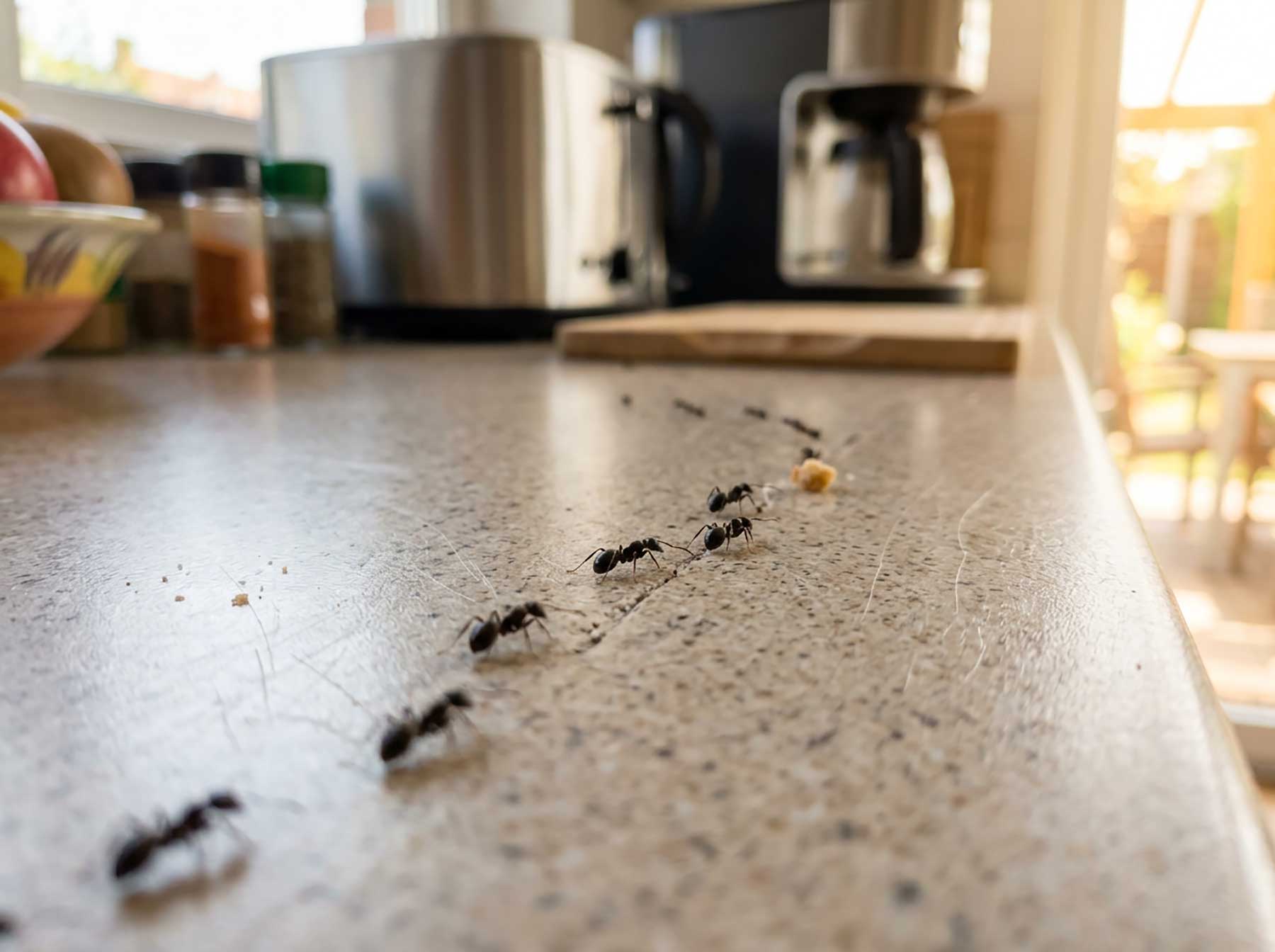
Every summer, thousands of Irish homeowners wake up to the same unwelcome surprise — a thin, winding trail of ants marching across the kitchen counter, disappearing behind the toaster, and reappearing near the sugar bowl. It starts with just one or two. Then five. Then dozens. By the time most people react, the colony has already mapped out your home like a military operation.
And that’s exactly what it is.
How Ant Colonies Actually Work (And Why It Matters)
Most people think of ants as random little insects wandering aimlessly until they stumble upon a crumb. The reality is far more organised — and far more difficult to deal with once you understand it.
Ant colonies operate with remarkable intelligence. Before you ever see a line of ants on your countertop, the colony has already sent out scout ants — solitary workers whose sole job is to explore new territory, find food sources, and leave behind an invisible chemical trail called a pheromone path. Once a scout finds something worth harvesting, it returns to the nest, and within hours, hundreds of workers follow the exact same route.
This is why killing the ants you can see rarely solves the problem. The trail has already been laid. The signal has already been sent. And the nest — which could house tens of thousands of ants — is usually located somewhere you’d never think to look: under your patio, inside a cavity wall, beneath the foundation of your home, or deep within your garden soil.
Understanding this behaviour is the first step toward effective ant control in Ireland, because it shifts your focus from reacting to what’s visible to addressing what’s hidden.
Why Irish Summers Are Prime Time for Ant Invasions
Ireland’s climate plays a unique role in the timing and intensity of ant activity. During the cooler, wetter months, colonies remain underground, conserving energy and breeding. But as temperatures begin to rise in late April through May, the colony awakens in full force. Workers venture further from the nest, foraging more aggressively, and scout ants begin exploring nearby buildings for easy food and water sources.
Your kitchen is the perfect target.
Think about it from the ant’s perspective. A typical Irish kitchen offers warmth, moisture, and an almost unlimited supply of food — from sticky jam residue on a shelf to a few grains of sugar near the kettle. Even the cleanest kitchens have micro-traces of food that are invisible to us but unmistakable to an ant’s highly sensitive antennae.
The problem intensifies during June and July, when colonies reach peak population and many species prepare for what’s known as “flying ant day” — that dramatic midsummer event when winged males and queens swarm into the air to mate and establish new colonies. If you’ve been ignoring a small ant problem in May, by July it can feel like your home is under siege.
The Most Common Mistakes Homeowners Make
One of the biggest mistakes people make when they spot ants in the house is reaching for a can of general-purpose insect spray. While it might kill the dozen or so ants you can see on the surface, it does absolutely nothing to the colony itself. In fact, some sprays can actually make the problem worse by causing the colony to fracture and split — a survival mechanism where the ants disperse and form multiple new nests in different locations around your property.
Another common error is relying solely on home remedies. The internet is full of suggestions — vinegar, cinnamon, coffee grounds, chalk lines. While some of these can temporarily disrupt a pheromone trail, none of them eliminate the colony. The ants simply reroute and find another way in. It’s a bit like blocking one door in a building with fifty entrances.
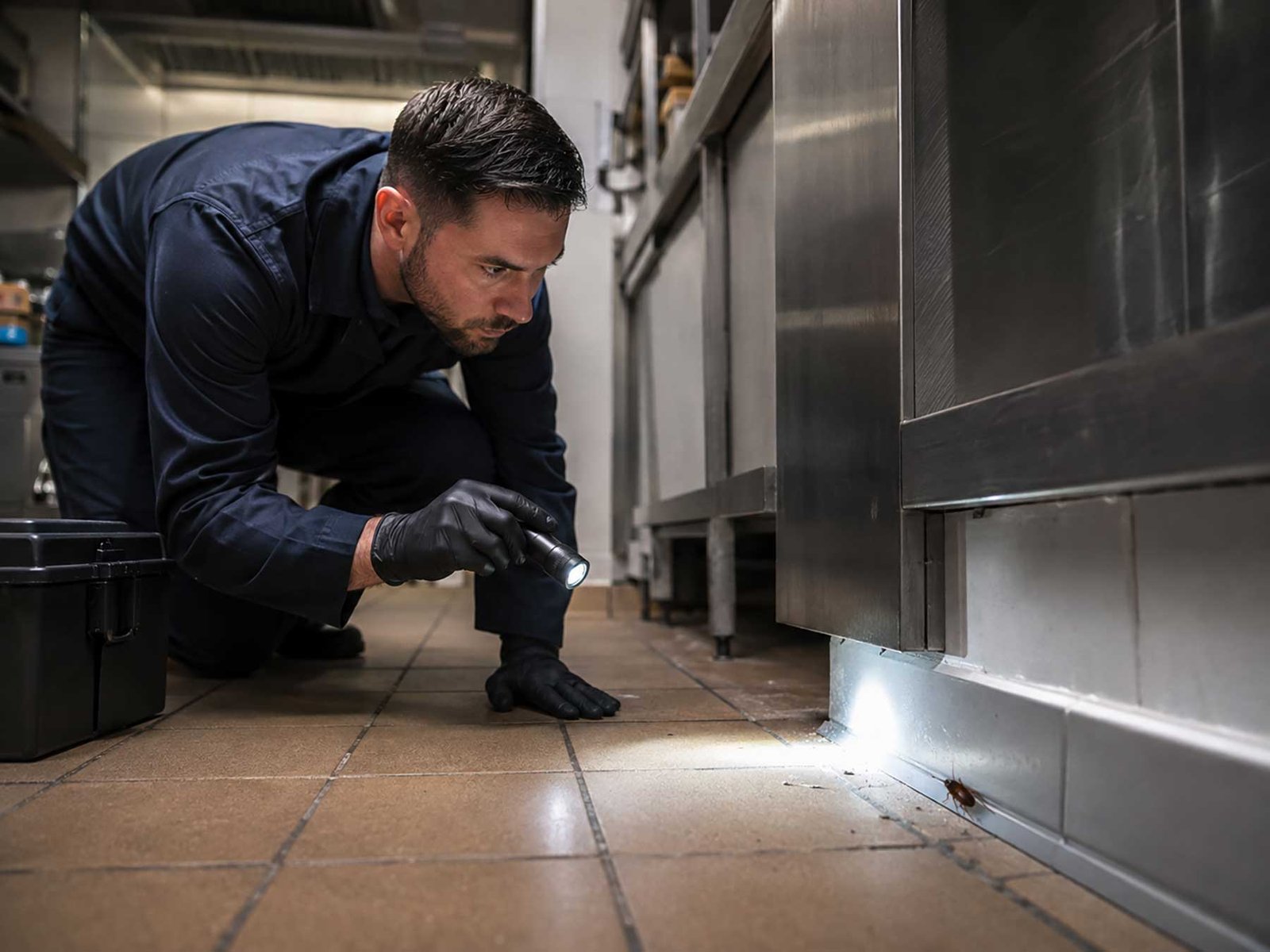
The truth is that effective ant pest control requires a strategic approach: identifying the species, locating the nest or nests, cutting off entry points, and applying targeted treatments that the worker ants carry back to the colony, reaching the queen herself. Without eliminating the queen, the colony will continue to regenerate indefinitely.
The Tiny Scouts in Your Kitchen: How to Stop an Ant Invasion Before the Summer Heat Hits
What You Can Do Right Now to Protect Your Home
Prevention is always more effective — and less stressful — than reaction. As we move into the warmer months, there are several practical steps you can take to make your home far less attractive to foraging ants.
Start with your kitchen. Wipe down all surfaces thoroughly every evening, paying special attention to areas around the hob, kettle, and toaster where crumbs and residue tend to accumulate. Store sugar, honey, cereal, and pet food in airtight containers rather than leaving them in open packaging. Take out bins regularly and make sure bin lids seal properly — even a slight gap is an open invitation.
Next, inspect the perimeter of your home. Walk around the outside of your property and look for small cracks in the walls, gaps around pipes, and spaces where cables enter the building. Seal anything you find with silicone caulk. Ants can fit through astonishingly small openings, so don’t dismiss a crack just because it looks minor.
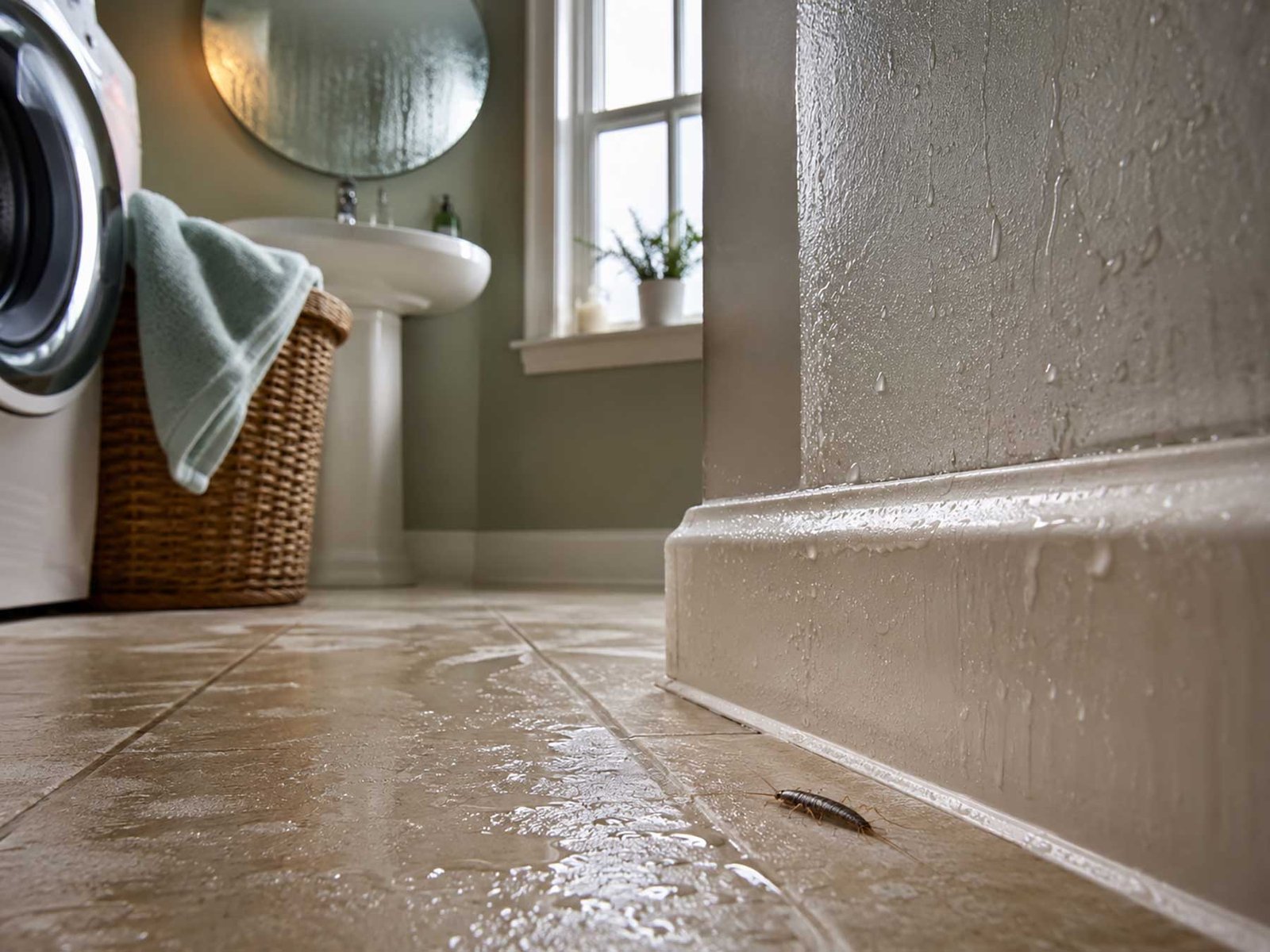
Finally, pay attention to moisture. Leaking taps, dripping outdoor hoses, and even condensation around windows can attract ants looking for water. Fix any leaks promptly and ensure proper ventilation in damp areas like utility rooms and bathrooms.
These steps won’t guarantee you’ll never see an ant again, but they significantly reduce the chances of a full-scale invasion — and they buy you valuable time to act before the problem escalates.
When It’s Time to Call a Professional
If you’re already seeing consistent ant trails inside your home, finding ants in multiple rooms, or noticing small mounds of fine soil appearing in cracks around your patio or driveway, the colony has likely been established for some time. At this stage, DIY methods are unlikely to resolve the issue, and the longer you wait, the larger and more entrenched the colony becomes.
Professional pest control services use targeted baiting systems and residual treatments specifically designed to be carried deep into the nest by the worker ants themselves. This approach eliminates the colony at its source — including the queen — rather than just treating the visible symptoms on the surface.
The Tiny Scouts in Your Kitchen: How to Stop an Ant Invasion Before the Summer Heat Hits
Discreet Pest Control — Professional Ant Treatment Across Ireland
At Discreet Pest Control, we understand that discovering an ant infestation in your home can be both frustrating and embarrassing. That’s why we operate with complete discretion — unmarked vehicles, uniformed technicians, and a fast, professional service designed to resolve the problem with minimal disruption to your household.
We provide expert ant control services across Dublin and surrounding areas, using proven treatment methods tailored to the specific species and scale of the infestation. Whether you’re dealing with a small trail of garden ants in the kitchen or a more serious infestation involving multiple entry points, our experienced team will identify the source, treat the colony, and advise you on long-term prevention.
Don’t wait until summer is in full swing. If you’ve spotted the first scouts in your kitchen, now is the time to act. Contact Discreet Pest Control today at discreetpestcontrol.ie for a free consultation and take back control of your home before the colony takes control of it for you.