Pantry Moths in Irish Kitchens: Prevention Tips. A pantry moth problem often begins quietly. You open a bag of flour and notice fine webbing. You pour cereal and see small larvae. A tiny moth appears in the kitchen, then another near the cupboard, then another near the ceiling. At first, it may not seem serious. But once pantry moths settle into dry food storage, they can quickly become a frustrating household problem.
Pantry Moths in Irish Kitchens are a common concern because modern homes store many dry foods in cupboards, presses, utility rooms and pantry spaces. Flour, rice, pasta, cereal, oats, nuts, seeds, dried fruit, pet food and baking ingredients can all become attractive if packaging is damaged or products are stored for too long.
Unlike some pests that arrive from outside, pantry moths are often introduced inside food packaging itself. A product may already contain eggs or larvae before it reaches your kitchen. Once inside the home, moths can spread from one item to another if dry foods are not sealed properly.
At Discreet Pest Control, we help Irish homeowners, tenants, landlords and businesses deal with pest problems discreetly and professionally. This guide explains how pantry moths spread, how to spot the signs, and what prevention steps can help protect your kitchen.
Pantry Moths in Irish Kitchens: Why They Appear
Pantry moths are attracted to stored dry foods. They do not need a dirty kitchen to survive. In many cases, the kitchen may be clean, but one infested packet in a cupboard is enough to start the problem.
They are commonly associated with grains, cereals, flour, nuts, seeds, dried fruit, rice, pasta, spices, pet food, bird seed and similar products. Once larvae begin feeding, they may create webbing, clumps, debris and contamination inside the product.
In Irish kitchens, pantry moths can be especially easy to miss because many homes keep dry goods in deep presses or cupboards. Items at the back may sit untouched for months. Open packets may be folded but not sealed. Bulk purchases may be stored in paper or thin plastic. Pet food may be kept in utility rooms or under counters.
All of these habits can create opportunities for pantry moths.
Pantry Moths in Irish Kitchens: Prevention Tips
What Do Pantry Moths Look Like?
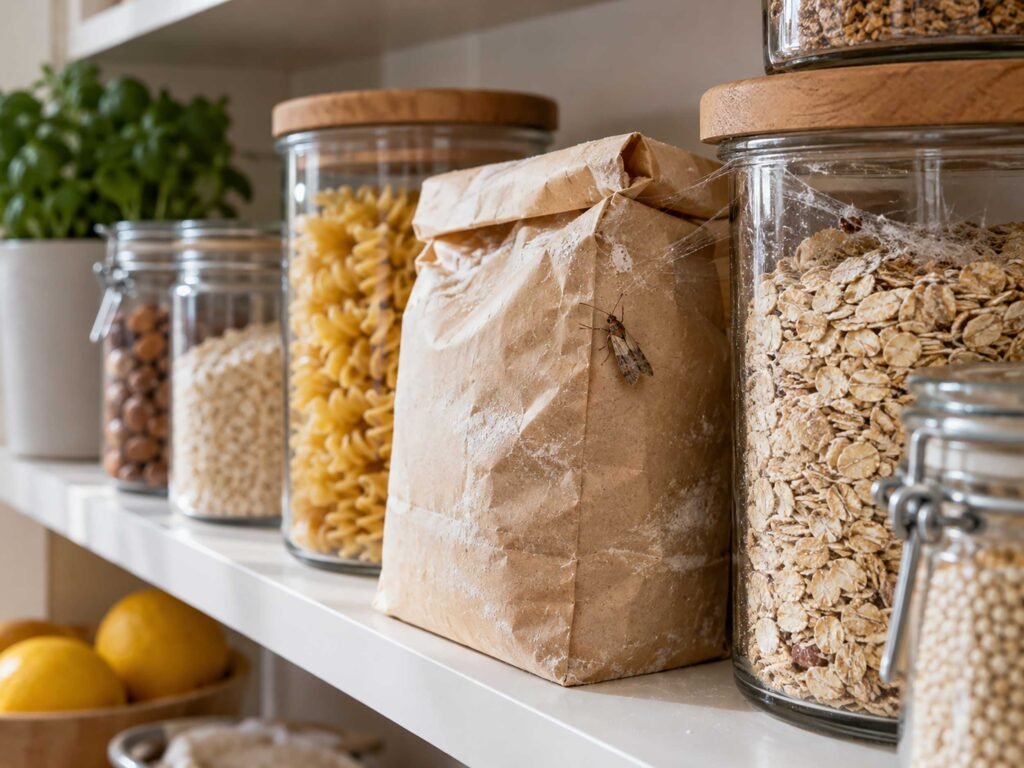
Adult pantry moths are small and usually seen flying around kitchens, cupboards, walls or ceilings. They may be most noticeable in the evening or when cupboard doors are opened. Their movement can be slow and fluttering, which makes them different from house flies.
However, the adult moths are not always the main issue. The larvae cause most of the contamination because they feed inside stored food. Larvae are usually small, pale and worm-like. They may be found inside packaging, along cupboard edges, in corners, under shelves or near lids and seams.
You may also notice webbing inside food packets. This can look like fine threads, clumps or silky material. If you see webbing in flour, cereal, oats or nuts, the product should not be used.
Warning Signs of Pantry Moths in Irish Kitchens
The earlier you identify pantry moths, the easier they are to control. Common signs include:
Small moths flying in or near the kitchen. Webbing inside food packets. Larvae in flour, cereal, rice or pasta. Clumps in dry food. Fine debris inside packaging. Moths resting on walls or ceilings. Activity near cupboards or pantry shelves. Small holes in packaging. Repeated moth sightings after cleaning.
A common mistake is to kill the adult moths but ignore the food source. If larvae remain inside packets, the problem will continue.
Where Pantry Moths Hide
Pantry moths do not always stay inside the packet where the problem began. Larvae can move away from food and hide in cracks, corners and shelf joins before pupating.
This means you may find activity in:
Cupboard corners. Shelf holes. Press edges. Behind jars. Around lid rims. Under shelf liners. Behind appliances. Inside cardboard packaging. In pet food storage. Around dried food containers. Utility rooms. Pantry shelves. Storage boxes.
Because larvae can move into small spaces, a proper clean-out is important. Simply removing one visible packet may not be enough.
Pantry Moths in Irish Kitchens and Food Storage Habits
Many Irish households store dry food in original packaging. This is normal, but it can increase risk if packets are opened and then loosely folded or clipped. Thin packaging can be damaged easily, and small gaps allow pests to enter or leave.
Cardboard packaging is also a problem because larvae can hide around folds and seams. Even unopened-looking boxes may contain inner bags that are not fully sealed.
Better storage is one of the strongest prevention methods. Airtight containers made from hard plastic, glass or metal can help stop pantry moths spreading between food items. They also make it easier to inspect your stock and notice problems early.
If you buy bulk dry goods, do not leave them in paper sacks or thin plastic bags for long periods. Transfer them into sealed containers and label them with purchase dates.
How to Clean After Finding Pantry Moths
If you discover pantry moths, start by inspecting all dry goods in the affected cupboard. Do not only check the product where you found the first sign. Open and examine flour, rice, pasta, cereal, oats, baking ingredients, nuts, seeds, dried fruit, spices, pet food and bird seed.
Discard contaminated items in sealed bags and remove them from the home. Do not leave them in the kitchen bin overnight.
Empty the cupboard fully. Vacuum shelves, corners, cracks, shelf holes and edges. Pay attention to tiny gaps where larvae could hide. After vacuuming, empty the vacuum contents outside into a sealed bag.
Clean shelves and containers thoroughly. Let everything dry before restocking. Moisture can create other pest and hygiene issues, so avoid leaving cupboards damp.
Before returning food, place it in sealed containers rather than loose packaging.
What Not to Do with Pantry Moths
Do not simply spray food cupboards with general insect products. Food storage areas need careful handling, and products should never be used in a way that could contaminate food, surfaces or packaging.
Do not keep “maybe okay” food if there are signs of webbing, larvae or contamination. It is better to discard suspect items than risk continuing the infestation.
Do not forget pet food. Pantry moths can develop in dry pet food, bird seed and animal feed. Utility rooms and storage cupboards should be checked as carefully as kitchen presses.
Do not ignore adult moths. If you keep seeing them after cleaning, it may mean there is still a hidden source.
Pantry Moths in Irish Rental Properties
Pantry moths can also affect rental properties and shared accommodation. In shared kitchens, the problem can be harder to manage because multiple people store food in the same space.
One person may clean their shelf, but another open bag of rice, cereal or pet food may continue the infestation. For students, tenants and house shares, communication is important. Everyone should check dry goods, remove contaminated food and store items in sealed containers.
Landlords and property managers should take repeated pest complaints seriously. Pantry moths may not damage the building in the same way as rodents, but they can create frustration, food waste and hygiene concerns for tenants.
A professional inspection from Pest Control Dublin can help if the source is unclear or if the problem keeps returning.
Pantry Moths in Food Businesses
Pantry moths are not only a domestic kitchen issue. They can also affect cafés, bakeries, restaurants, small food shops, storage rooms and catering businesses.
Any business storing flour, grains, seeds, nuts, dried goods, cereals, spices or dry ingredients should have a clear stock rotation and inspection routine. Older stock at the back of shelves is a common risk. Damaged packaging should be removed. Shelves should be cleaned regularly, and dry goods should be stored securely.
For businesses, pest activity around food products can affect customer confidence and operational standards. That is why Commercial Pest Control is important for food-related premises.
Discreet Pest Control can help businesses identify risk areas and support a practical pest prevention plan.
Prevention Tips for Pantry Moths in Irish Kitchens
Prevention is the best way to avoid pantry moth problems. Start by checking dry goods when bringing them home. Look for damaged packaging, webbing or clumps. Avoid storing old food for too long. Use a first-in, first-out system so older products are used before newer ones.
Transfer dry foods into airtight containers. Keep cupboards clean and dry. Vacuum pantry shelves occasionally. Avoid letting crumbs and spilled flour build up. Check pet food and bird seed regularly. Do not overbuy dry goods unless you can store them properly.
If you notice one or two moths, investigate immediately. Early action can prevent a small issue from becoming a full cupboard clean-out.
When Professional Pest Control May Be Needed
Many minor pantry moth problems can be improved with inspection, disposal, cleaning and better storage. But professional help may be needed if the source is difficult to find, moths keep returning, several cupboards are affected, or the issue is in a business premises.
Professional pest control can help confirm the pest, identify likely harbourage areas, advise on prevention and recommend the best control approach for the property.
At Discreet Pest Control, we understand that kitchen pest problems can feel embarrassing, especially in family homes, rentals and food businesses. Our approach is discreet, practical and professional.
Pantry Moths in Irish Kitchens: Prevention Tips
Final Thoughts on Pantry Moths in Irish Kitchens
Pantry moths are not a sign of poor housekeeping. They are often introduced through dry food products and can affect clean, well-maintained kitchens. The problem usually becomes worse when dry goods are stored loosely, old stock is forgotten, or contaminated items are not removed quickly.
The best defence is simple: inspect dry goods, use airtight containers, clean cupboard corners, rotate stock and act early if you see moths, larvae or webbing.
If you are dealing with Pantry Moths in Irish Kitchens, contact Discreet Pest Control for professional advice and discreet pest control support across Dublin and surrounding areas.